While this budget makes several important investments, it also leaves major challenges unaddressed — challenges families here in Delaware County feel every day, including rising energy costs, higher household expenses, and growing pressures on healthcare and family budgets, as well as unsustainable transit funding that puts the future of essential services at risk.
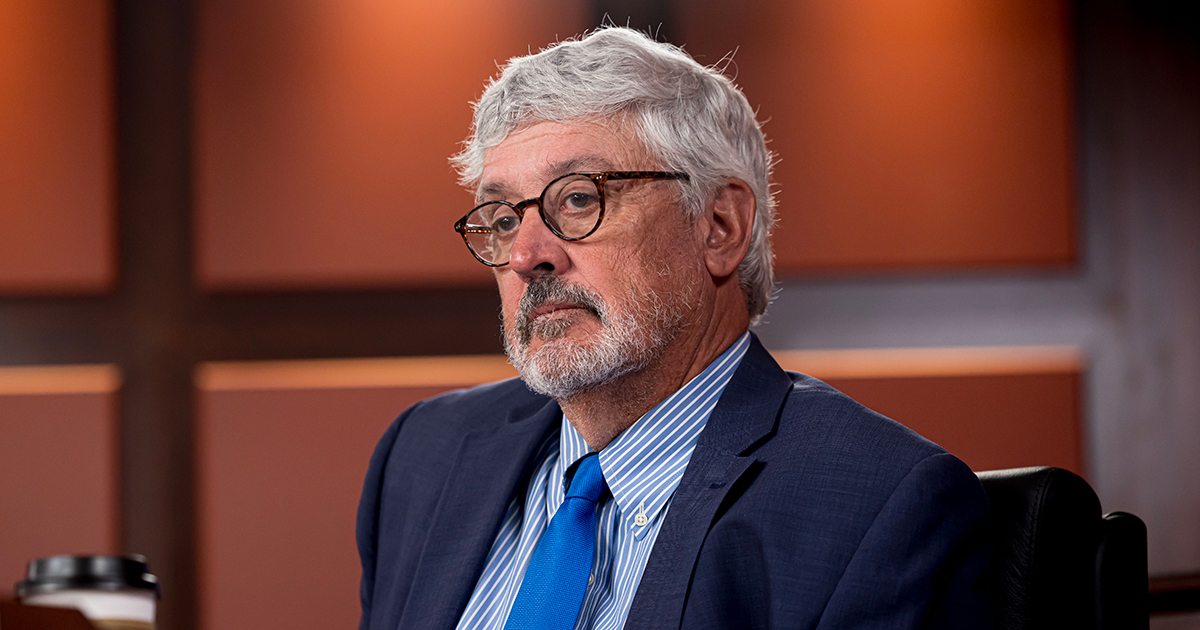
DELAWARE COUNTY, PA – July 13, 2026 − Today, after lawmakers advanced the 2026–2027 state budget following a rare weekend special session, Senator Tim Kearney (PA-26) issued the following statement highlighting both important investments and significant challenges the legislature must still confront.
“Families and working people across the Commonwealth have been clear about what they expect from their government: put working families first. They want a legislature that listens to the people who are struggling with rising costs — not the corporations, billionaires, and wealthy interests. Our obligation is to deliver a budget that reflects those priorities.”
“This year’s $50.8 billion budget, a 3.7% increase over last year, reflects those priorities and delivers some hard-fought victories for children, seniors, and working families. And yet, many essential priorities are underfunded or unfunded — it’s not where we want to be.
Budget Victories
“Statewide, the budget provides a $678 million increase for K–12 education, including $565M in adequacy and equity funding for long-underfunded public schools — easing pressure on property taxpayers and strengthening communities. Nearly $9M will go to Upper Darby and $5.6M to William Penn, two districts that have carried deep funding gaps for years. The budget also maintains $100M for the Public School Facility Improvement Grant Program and $25M for Solar for Schools, giving districts greater flexibility to upgrade aging buildings and lower long-term energy costs.”
“We also secured $419M for the PHEAA State Grant Program to reduce the cost of college, $30M for childcare worker retention bonuses, more than $200M in tax relief through the Working Pennsylvanians Tax Credit, and $23.7M to support historically disadvantaged businesses.”
“Additional noteworthy investments include $62M for violence–intervention programs, doubled funding for rape crisis centers, $7M to modernize EBT cards, and $775M to repair state–owned roads and bridges. More than 80,000 retired teachers, police officers, firefighters, and other public employees will finally receive a long-overdue cost-of-living adjustment. And $125M for Innovate in PA 2.0, that will expand life-science and biotech jobs — strengthening a sector that employs thousands across our region and bolster high-skill opportunities while attracting new companies and supporting research.”
Budget Shortcomings
“Of course, we didn’t get everything we wanted—far from it. Early childhood education received only half of what the Governor requested. Pennsylvania’s minimum wage remains unchanged at $7.25 an hour for twenty years. The budget deal also neglected energy affordability, data-center accountability, and utility price gouging. And once again, we saw no progress on transit funding, leaving SEPTA and transit agencies across Pennsylvania heading toward another fiscal cliff.”
“At Senate Republican insistence, the budget is balanced with one-time revenues, fund transfers, and payment shifts. Senate Democrats would have preferred sustainable revenue through raising the minimum wage, closing the Delaware Loophole (a profit-shifting loophole used by multistate corporations to avoid PA taxes), regulating and taxing non-casino gaming, and legalizing adult use cannabis— proposals included in Governor Shapiro’s February budget. Senate Republicans refused.”
Taxing Billionaires and Busboys the Same: Why Pennsylvania’s Budgets Keep Falling Short
“Many of this year’s budget shortcomings share a single cause: an outdated rule that limits our ability to fund schools, transit, healthcare, and public safety. That rule is known as the Uniformity Clause — a section in our state constitution that requires every taxpayer to be taxed at the exact same rate — regardless of income, wealth, or ability to pay. As a result, Pennsylvania cannot adopt a graduated income tax, create targeted property-tax relief for seniors or homeowners, or apply modern tax policies used successfully in other states.”
“What results is a system that puts the heaviest burden on people with the least, while limiting our ability to raise sustainable revenue. Really, Pennsylvania doesn’t have a spending problem; we have a regressive revenue problem, and eliminating this rule will allow us to adopt a modern, fair budget capable of funding the services Pennsylvania communities rely on.”
“In the coming weeks, I will introduce a co–sponsorship memo to repeal the Uniformity Clause — a necessary step toward tax fairness and relief for working families.”
Healthcare Systems Protection Act & Abby’s Law
“We anticipated progress on two important bipartisan bills during budget negotiations. The Healthcare Systems Protection Act, which protects patients from the private equity predations that destroyed the Crozer Health System, and Abby’s Law, which sets statewide safety rules for e–scooters in the wake of the tragic accident that took the life of 12-year-old Abigail Gillon and critically injured her friend. Both bills received input from both sides of the aisle, have wide public backing, and life-saving implications. And yet, both bills ultimately weren’t given consideration, victims of partisan politicking.”
“I am disappointed, but will continue to fight for these life-saving bills once the budget smoke clears, and promise to finish what we started.”
The Work Ahead
“Taken together, this budget shows both the progress we’ve made and the work still ahead, and the importance of having both a Senate and House that share a sensible approach to governance. In the months to come, we will continue fighting to advance bipartisan legislation and strengthen the public services Pennsylvanians rely on.”
“The work is not finished, but I am excited about the possibilities the future can bring, and I remain committed to helping deliver the stable, well-funded future the hard-working people of this Commonwealth deserve.”