
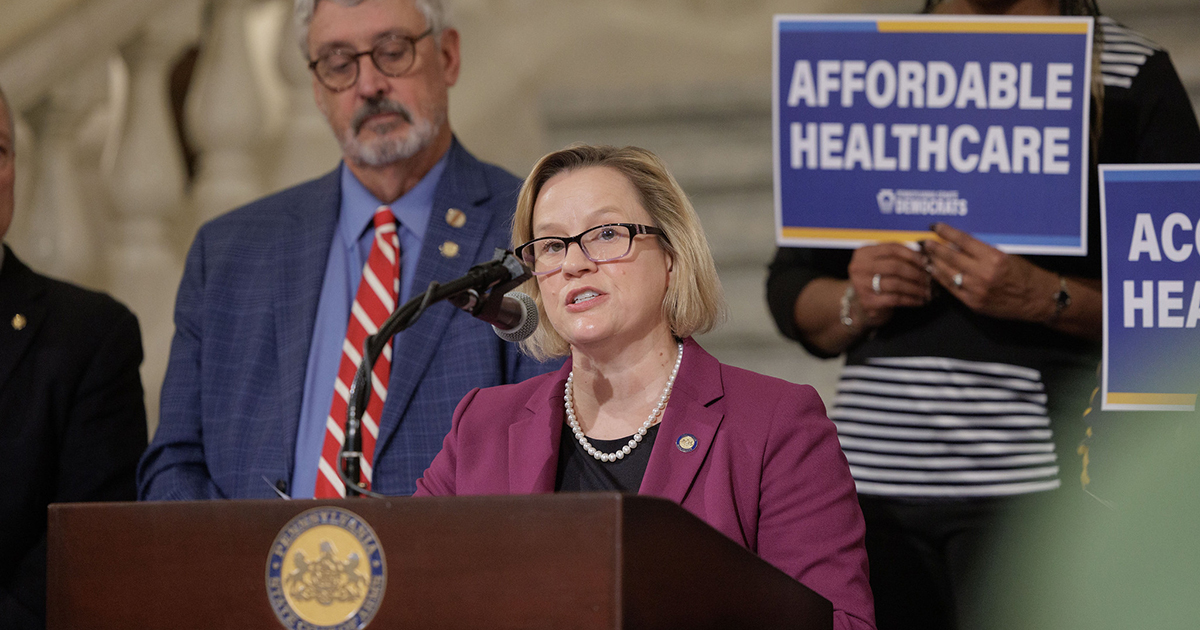
Harrisburg, Pa. − April 9, 2026 − Senator Maria Collett (D-12 Montgomery, Caucus Chair) has announced a new slate of legislation to address rising healthcare costs in Pennsylvania.
With skyrocketing out-of-pocket costs, crippling medical debt, and unaffordable insurance premiums, nearly half of American adults are struggling to afford healthcare. 120,000 Pennsylvanians cancelled their health insurance after Washington Republicans refused to extend Affordable Care Act subsidies. Due to changes included in President Trump’s One Big Beautiful Bill Act of 2025, an estimated 16 million Americans will lose health coverage by 2034.
“As a nurse who cared for patients at the bedside, I have seen firsthand the dire need for affordable, accessible healthcare,” said Collett. “Pennsylvanians deserve care, not cuts. They deserve leaders who offer solutions, not excuses. That’s why I continue to push legislation that will reduce out-of-pocket costs for preventive care and medications while addressing systemic issues like private equity greed.”
Senator Collett’s proposed legislation includes:
Preventive Care & Medication Affordability
- Maintaining Access to Preventive Healthcare: Requires health insurance policies to cover preventive health care services without cost-sharing.
- Co-pay Accumulator Legislation (SB 268): Requires insurers or pharmacy benefit managers (PBMs) to count any amounts paid by the enrollee or paid on behalf of the enrollee by another party (i.e., drug manufacturer) when calculating an enrollee’s overall contribution to the plan’s deductible or out-of-pocket limit.
- Capping the Cost of Epinephrine Delivery Systems for All (SB 1126): Requires health insurers to cap the cost of Epinephrine Delivery Systems and limits the out-of-pocket cost for consumers to $35.
- Access to Contraceptives (SB 1112): Requires insurers to provide coverage for contraceptives, eliminates most co-payments for related coverage, removes pre-authorization requirements for certain contraceptives, and authorizes insurers to cover up to 12 months of birth control at one time.
Systemic Reforms
- Commission on Comprehensive Health Coverage: Establishes a diverse 24-member commission tasked with evaluating the feasibility of creating a comprehensive health coverage system for the state by 2029. The primary objective of the commission will be to study how to provide affordable, high-quality healthcare coverage to all Pennsylvanians regardless of income or existing insurance.
- Nursing Home Resident Protections: To prioritize nursing home resident care, this legislation would require:
- Consolidated Financial Reporting for licensed nursing home facility operators.
- That at least 75% of taxpayer funds dedicated to a facility are spent on direct bedside care.
- Establish complete ownership records for each individual or entity that owns or operates the facility; and
- Reform licensing requirements to prevent the transfer or sale of skilled nursing facilities to entities with a history of closures in the Commonwealth or nationwide, unless specifically approved by the Department of Health.
- Containing the Cost of Healthcare for Pennsylvanians: Establishes an annual Health Care Cost Growth Benchmark, setting a target to limit the growth of total health care spending in line with the state’s economic growth. Health systems or insurers that exceed this benchmark would be required to submit a performance improvement plan to realign their costs.
###