
Important changes are coming to the Medicaid program, also known as Medical Assistance, in Pennsylvania.
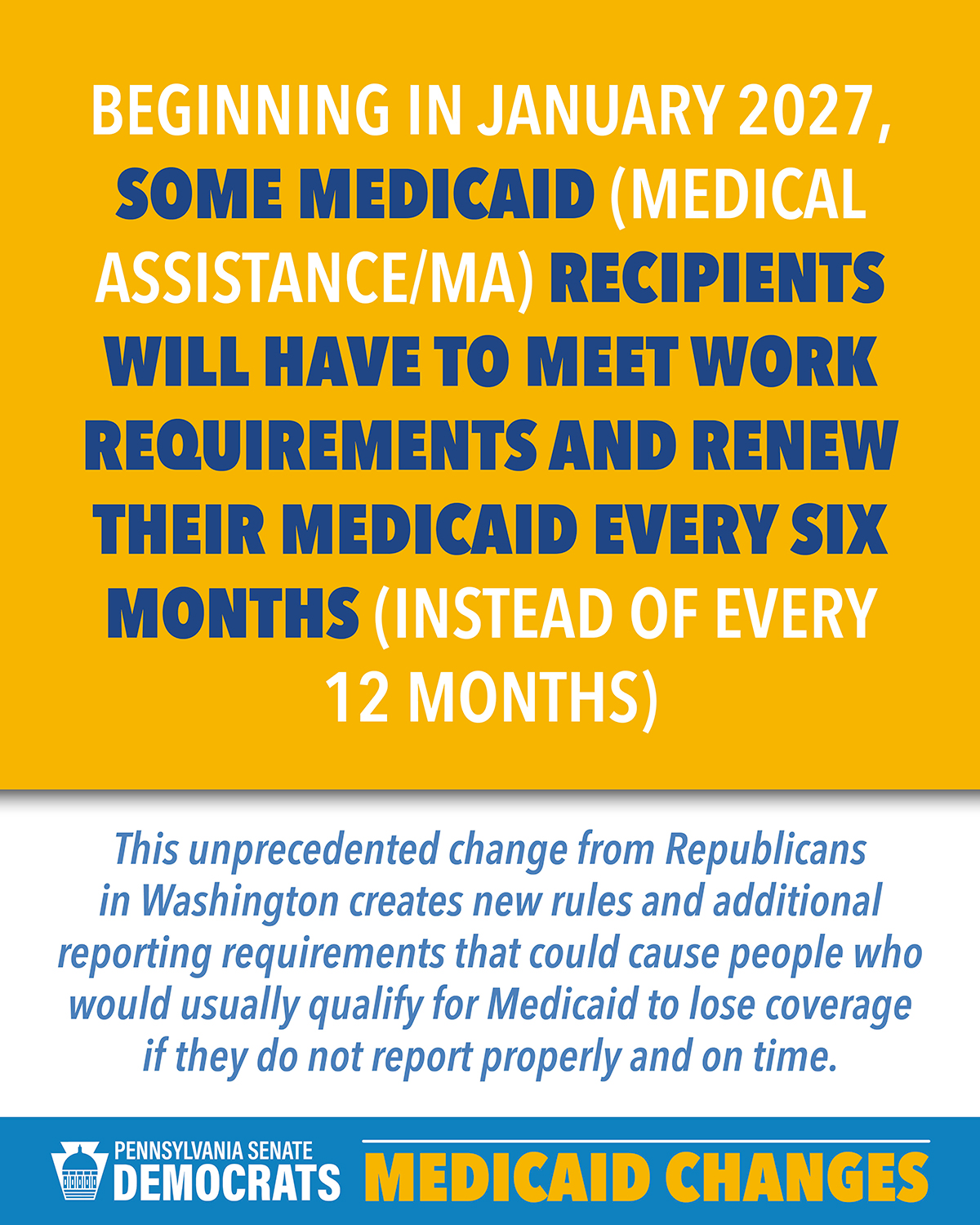
In July 2025, Republicans in Congress passed a bill that makes changes to the Medicaid program. President Trump signed that bill into law. Because of this new federal law, some Medicaid recipients will be required to renew their Medicaid every six months instead of every year. Additionally, some Medicaid applicants and recipients will need to meet work requirements or meet an exemption and report to PA DHS. If they do not report, they could lose coverage or be ineligible for Medicaid.
Keep reading to learn more about these changes, how they will affect Medicaid recipients, and how to meet the new work requirements or an exemption.
What are the changes to Medicaid?
There are three major changes coming that will affect some Medicaid applicants and recipients:
Renewing Medicaid Every Six Months
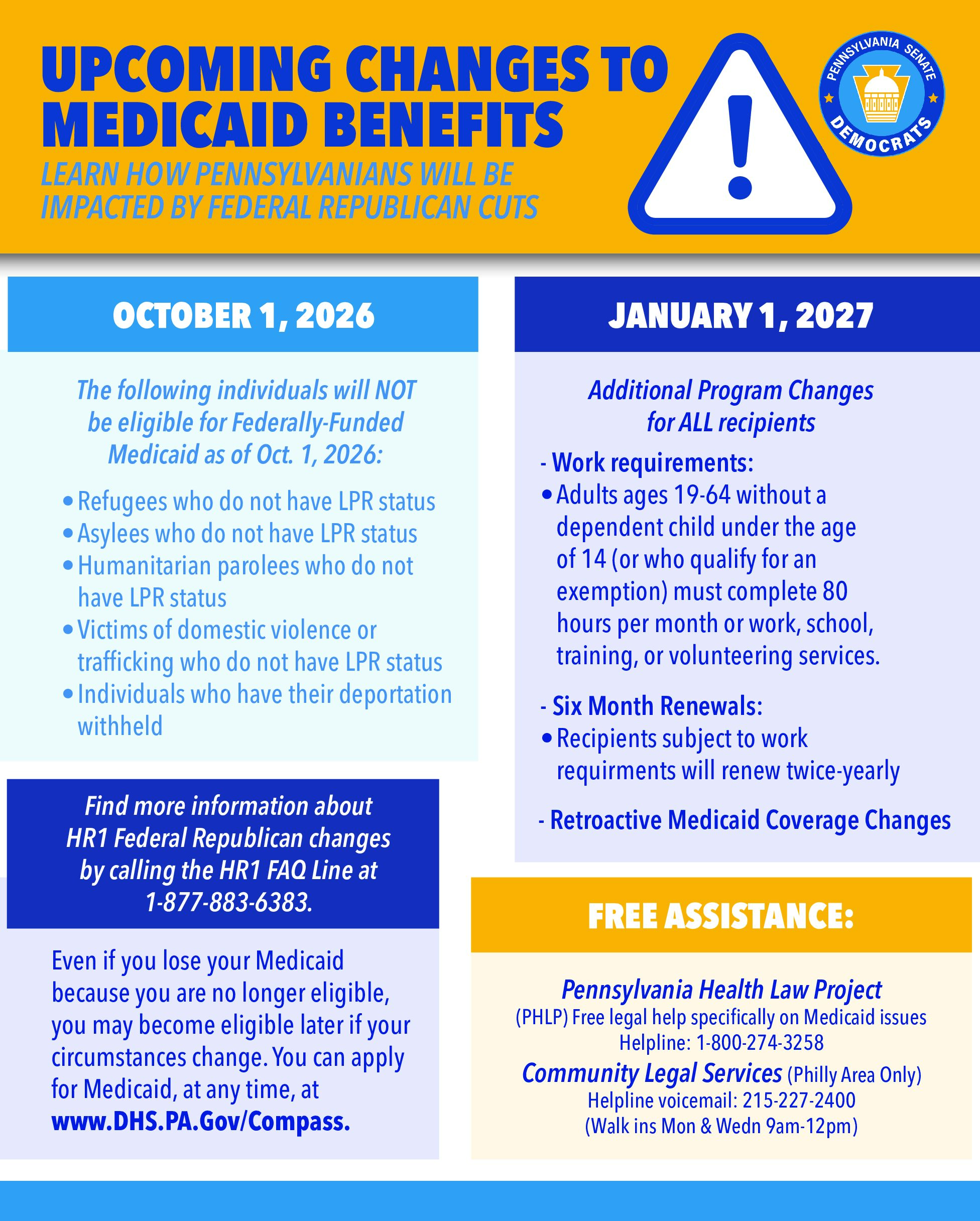
Starting January 1, 2027, some adults ages 19-64 will need to have their Medicaid eligibility checked by completing a renewal every six months instead of every year.
For example, if they apply for Medicaid on or after January 1, 2027, they will have to renew their Medicaid in six months. If their coverage begins in January 2027, they will complete a Medicaid renewal in July 2027.
If they are currently on Medicaid, the current renewal date will not be shortened until after their next renewal. For example, if their next Medicaid renewal is due in March 2027, they will renew again in September 2027.
Work and Community Engagement
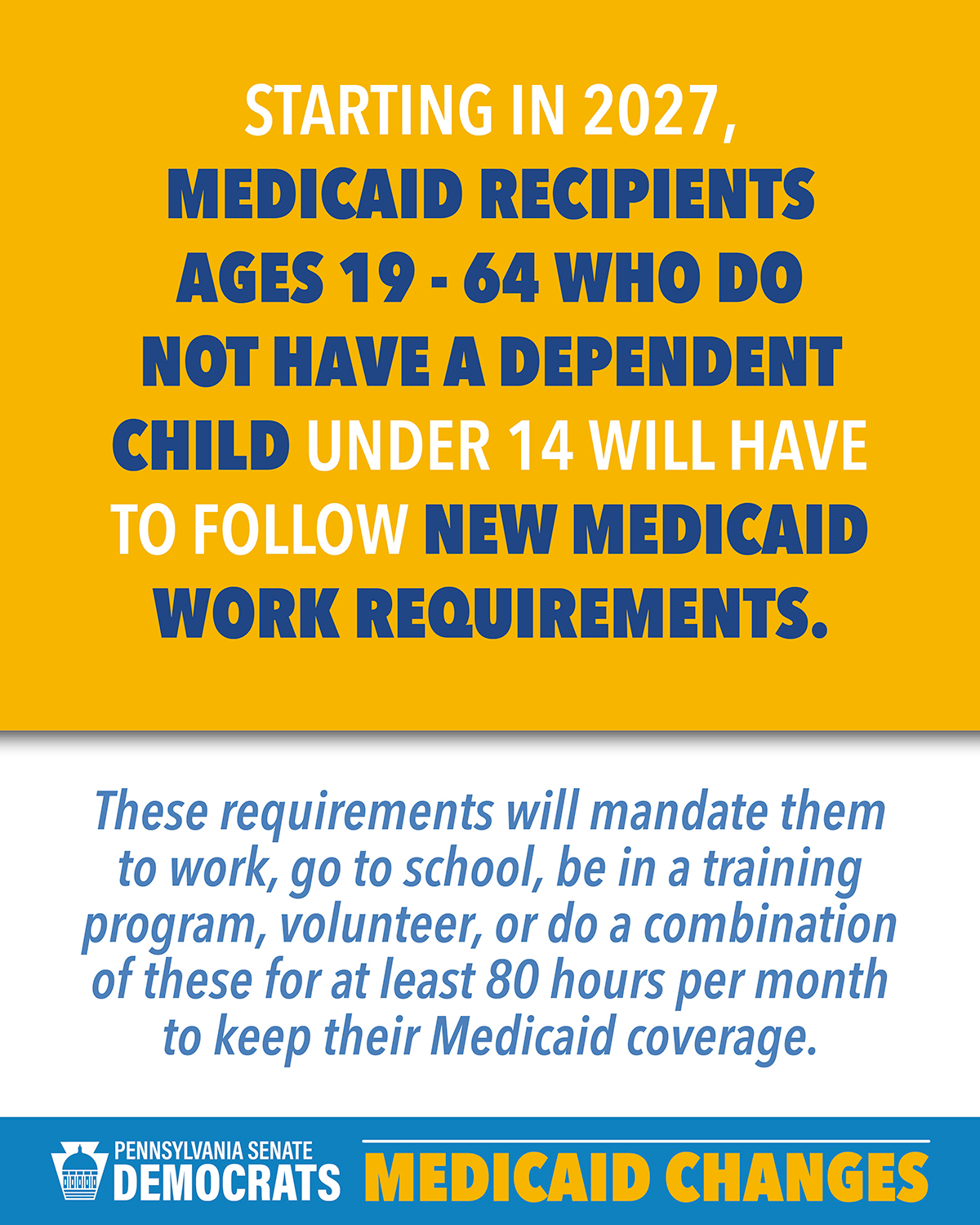
Starting January 1, 2027, some adults ages 19-64 who do not have a dependent child under 14 years old must show that they are meeting work requirements. This will be reviewed during application, renewal, and when an individual becomes eligible for Medicaid expansion between renewals. If they must meet the requirement but do not follow the new rules or report to PA DHS, they will lose Medicaid coverage.
Some people may be exempt from the requirement.
Retroactive Medicaid
Starting January 1, 2027, retroactive Medicaid coverage timeframes will decrease for Medicaid applicants. Retroactive coverage is for medical expenses that occurred prior to the month of application. Retroactive coverage can currently be approved for up to three months prior to the month of application for Medicaid.
As of January 1, retroactive coverage windows will shorten to the following:
- One month for Medicaid expansion adults (age 19-64)
- Two months for all other Medicaid recipients
What are Medicaid work requirements?
To meet the work requirement, applicants and recipients must do one or a combo of these options for at least 80 hours a month:

Work

Volunteer or do community service

Participate in a work training program

Go to school at least part-time
Going to school at least part time meets the full work requirement. When attending less than half time, hours can be combined with other activities to meet the 80-hour requirement. Each school determines whether their students are enrolled full time, part time, or less than part time.
Applicants and recipients may also meet the requirement based on their household’s monthly income if it is at least $580 each month. Seasonal workers may also meet work requirements based on their household’s average monthly income. Your caseworker can help you calculate if your income meets this option.
Remember: Applicants and recipients must report to PA DHS that they are meeting work requirements or an exemption during their application, renewal or if they become eligible for Medicaid expansion between renewals.
If they do not tell PA DHS, they may lose your Medicaid coverage.
Changes to Medicaid eligibility rules for noncitizens
Changes for noncitizen eligibility for Medicaid will begin October 1, 2026.
If you or someone in your household are receiving Medicaid and are affected by these changes, PA DHS will send you a letter before October 2026.
This letter will ask you to submit documents about your immigration status to see if you can still get benefits. Please watch for this letter and make sure you submit your documents.
If you do not submit your documents on time, your Medicaid coverage may end starting October 1, 2026.
Find more information about HR1 changes by calling the HR1 FAQ Line at 1-877-883-6383.
Key Dates for Medicaid Changes
By September 2026: Communication about Medicaid changes
PA DHS will start reaching out to Medicaid recipients affected by these changes. That outreach will include mail, calls, and texts.
October 1, 2026: Changes for noncitizen eligibility for Medicaid
The following individuals will NOT be eligible for Federally-Funded Medicaid as of Oct. 1, 2026:
- Refugees who do not have LPR status
- Asylees who do not have LPR status
- Humanitarian parolees who do not have LPR status
- Victims of domestic violence or trafficking who do not have LPR status
- Individuals who have their deportation withheld
January 1, 2027: Work and community engagement requirements
Work requirements go into effect for adult Medicaid recipients ages 19-64 who do not have a dependent child under 14 years old and do not meet an exemption.
Medicaid applicants and recipients must report they are meeting the work requirements or an exemption when they apply for or renew Medicaid coverage. If they do not report, they could lose coverage or be ineligible for Medicaid.
Medicaid coverage will not automatically change on January 1. Current Medicaid recipients will need to report they are meeting the new requirements or an exemption at their next renewal date in 2027. PA DHS will send a notice if there are changes to benefits
January 1, 2027: Eligibility renewal every six months
Some adults ages 19 to 64 years old will have to renew their Medicaid every six months instead of every year. Current Medicaid recipients will switch to six months renewals after completing their next Medicaid renewal in or after February 2027. Renewals must be completed and returned to PA DHS to stay covered by Medicaid.
January 1, 2027: Retroactive Medicaid coverage changes
The timeframe will change for new Medicaid applicants who apply for retroactive coverage to cover medical expenses that occurred prior to the start of their Medicaid. Retroactive coverage can currently be approved for up to three months prior. As of January 1, retroactive coverage windows will change as follows:
- One month for Medicaid expansion adults (age 19-64)
- Two months for all other recipients
Medicaid Changes FAQs
Find answers to common questions about changes coming to Medicaid in Pennsylvania in January 2027. In July 2025, Republicans in Congress passed a bill that makes changes to the Medicaid program. President Trump signed that bill into law. Because of this new federal law, some Medicaid recipients will be required to renew their Medicaid every six months instead of every year. Additionally, some Medicaid applicants and recipients will need to meet work requirements or meet an exemption and report to PA DHS. If they do not report, they could lose coverage or be ineligible for Medicaid. Explore the FAQs below to learn what these changes mean, who is affected, and what steps you can take to meet the new work requirements or qualify for an exemption.
Preparing for Medicaid Changes
What should I do right now to get ready for changes to Medicaid?
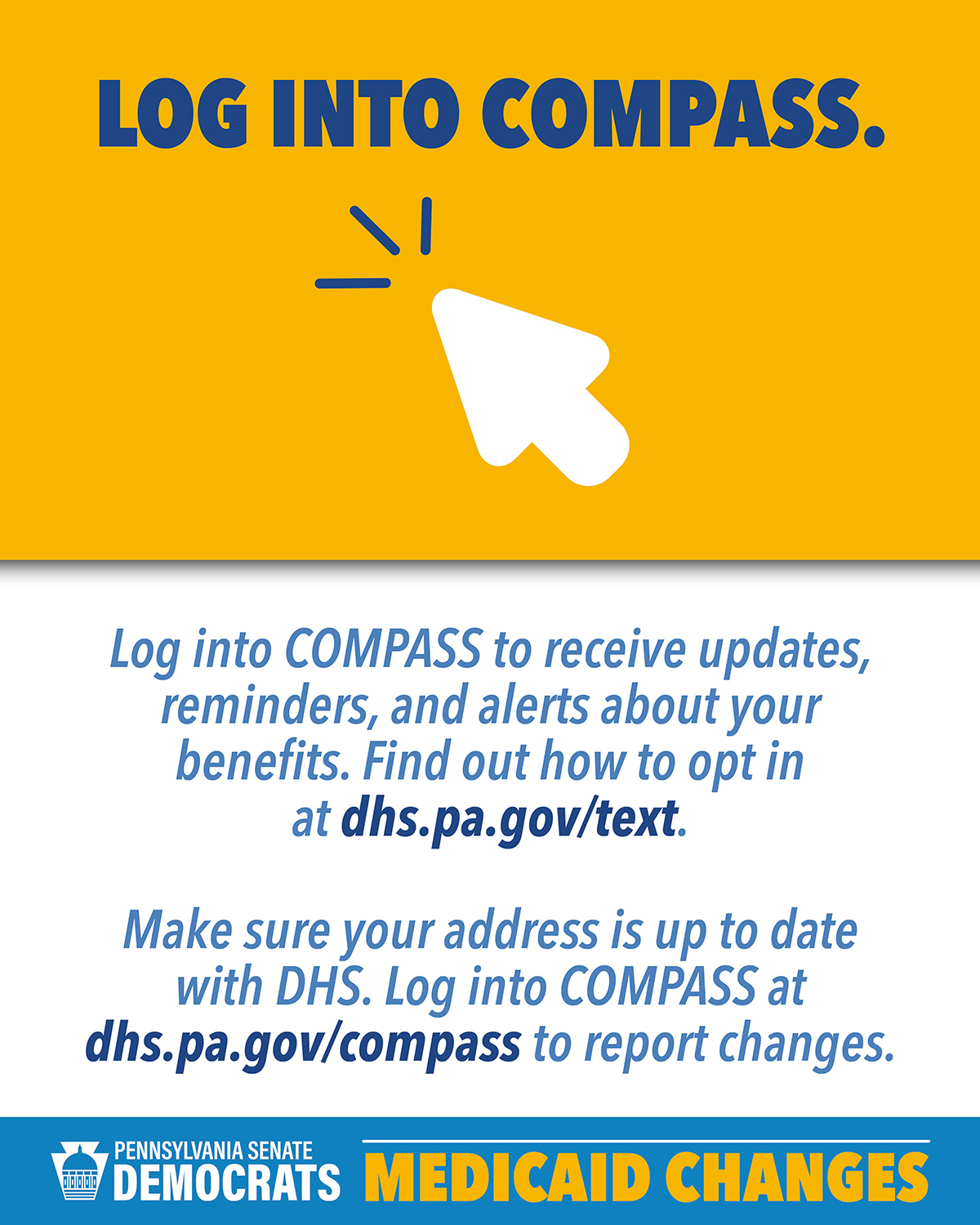
Update your address: Log in to COMPASS at dhs.pa.gov/COMPASS or the myCOMPASS PA mobile app to check and update your address and other contact information.
Report address changes to the US Postal Service. If you updated your address in COMPASS, you also need to report address changes to the US Postal Service to ensure you receive mail from us. Visit USPS.com/move to update your address.
Sign up for texts and emails from DHS. Visit dhs.pa.gov/text to sign up for texts and emails to get even faster notifications about your benefits.
I am on SNAP and Medicaid. Do I need to report work for both programs?
SNAP recipients subject to a SNAP work requirement who also receive Medicaid are excluded from the Medicaid work requirement. This applies to the following groups:
- People who have already shown they are meeting the SNAP work requirement; and
- People who are not meeting the SNAP work requirement but are receiving their three months of time-limited SNAP benefits.
How do I know if texts or phone calls that say they are from PA DHS are real and not a scam?
Text messages from PA DHS will come from the PA DHS 69217 number and recorded phone calls will come from the PA DHS 1-877-839-4782 number.
PA DHS will never ask you to provide personal information about you or your benefits over text message.
Who do I contact if I have questions?
Find more information about HR1 changes by calling the HR1 FAQ Line at 1-877-883-6383.
Call the PA DHS HelpLine at 1-800-692-7462 (1-800-451-5886 TDD for individuals with hearing impairments).
Medicaid Work Requirements & Six Month Renewals
How will I know if the work requirements apply to me?
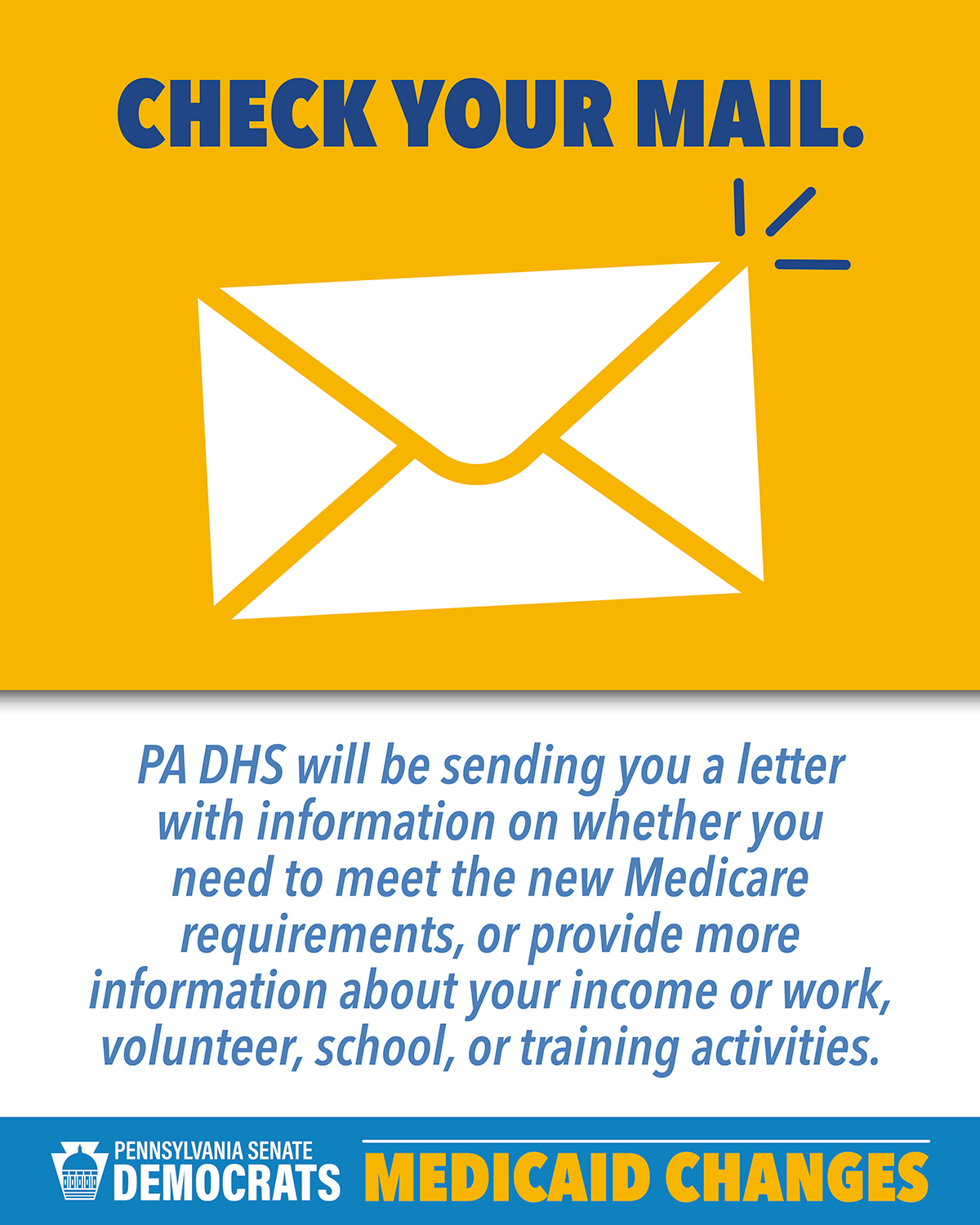
If you currently are on Medicaid, PA DHS will send you information by mail, phone call, or text if the work requirements apply to you or someone in your household. You will also be asked about work requirements during your renewal.
If you are applying for Medicaid, PA DHS will check if the work requirements apply to you during your application. If you need to meet the work requirements, that will be checked during your application.
I’m applying for Medicaid for the first time. Do work requirements apply to me?
The work requirements may apply to you. Not everyone needs to meet work requirements, and some Pennsylvanians may be exempt.
If you apply for Medicaid after January 1, 2027, there will be questions about work requirements and exemptions in your Medicaid application. You will need to report on meeting work requirements or an exemption in the month before the month you apply.
If you don’t report that you are meeting work requirements or an exemption, you may not be eligible for Medicaid coverage.
I think I am exempt. Do I need to do anything?
Check the list of exemptions on dhs.pa.gov/medicaidchanges. If any of these situations apply to you, report your exemption to your local county assistance office and provide information about your exemption. You need to report your exemption at your next renewal or you will be required to show you meet the work requirement to remain eligible.
I currently receive Medicaid. What will happen to my Medicaid coverage?
If you are already receiving Medicaid, there will be questions about work requirements and exemptions starting with your first renewal in 2027. You will need to report on meeting work requirements or an exemption in at least one of the months since your last renewal.
If you don’t report that you are meeting work requirements or an exemption, you may lose Medicaid coverage.
Your Medicaid coverage will not end without notice. PA DHS will always send you a notice if your coverage changes for any reason. Make sure you respond to notices you receive from PA DHS, especially if those notices ask you for information like whether you are working, in school, volunteering, or participating in a job training program.
When do I need to renew?
You can find your next renewal date on COMPASS or the MyCOMPASS PA mobile app.
Starting in January 2027, some adults will have to renew their Medicaid every six months instead of every year. This may apply to you if you are 19 to 64 years old. If this new rule applies to you, you will switch to six-month renewals after completing your first renewal that occurs in 2027.
If you apply for Medicaid after January 1, 2027, your first renewal will be six months after your benefits start.
You must renew to keep getting Medicaid.
How do I report work or an exemption?
You can report work or an exemption on your Medicaid application or renewal form.
You can also submit documents with these forms through COMPASS or the myCOMPASS PA mobile app or call the Customer Service Center at 877-395-8930 (215-560-7226 in Philadelphia).
When do I need to show that I am meeting work requirements or an exemption?
For a new application, if you do not meet an exemption, you will need to provide information to show you met the work requirement for the month before the month you applied. For example, if you apply in March, you need to show you met the work requirement in February.
For a renewal, if you do not meet an exemption, you will need to provide information to show that you are meeting the work requirement in at least one month since your last renewal.
How do I provide information for work requirements and exemptions?
- Paid work must always be verified, so you need to provide information to PA DHS showing that you received payment, such as a pay stub.
- In 2027, most other work activities and exemptions can be verified by answering questions (self-attestation) on your application or renewal. This means you can self-report that you are meeting these requirements or meet an exemption.
- In 2028, you will be required to provide information at application and renewal to show you are meeting the work requirements or an exemption.
If I lose Medicaid, can I reapply?
Yes, you can reapply for Medicaid at any time.
If your Medicaid benefits were denied or closed for not reporting or meeting a work requirement or an exemption and your circumstances change, you will need to show that you met the work requirement or exemption in the month before the month you apply.
A few examples of a change in circumstances include:
- You start working, going to school or a work program, or volunteering for 80 hours a month, or
- You start meeting an exemption.
If I lose my job before my next renewal, will I lose my Medicaid?
Work requirements are checked during your renewal. If you lose your job, you will continue to have Medicaid coverage as long as you are still otherwise eligible.
Other Medicaid Changes
I am not a citizen. Am I still eligible for Medicaid?
Some noncitizens may no longer receive Medicaid as of October 1, 2026, including refugees, asylees, humanitarian parolees, trafficking or domestic violence victims, those with deportation withheld, or those granted conditional entry who are over 21 and not pregnant or postpartum.
We will review your status before October 1, 2026. If you are no longer eligible, we will send you a notice and your Medicaid will end on October 1, 2026. Most other noncitizens will still need to wait five years before they can get Medicaid unless they have an emergency medical condition.