
Proposal would remove barriers to tax reforms that support working families, homeowners, and small businesses
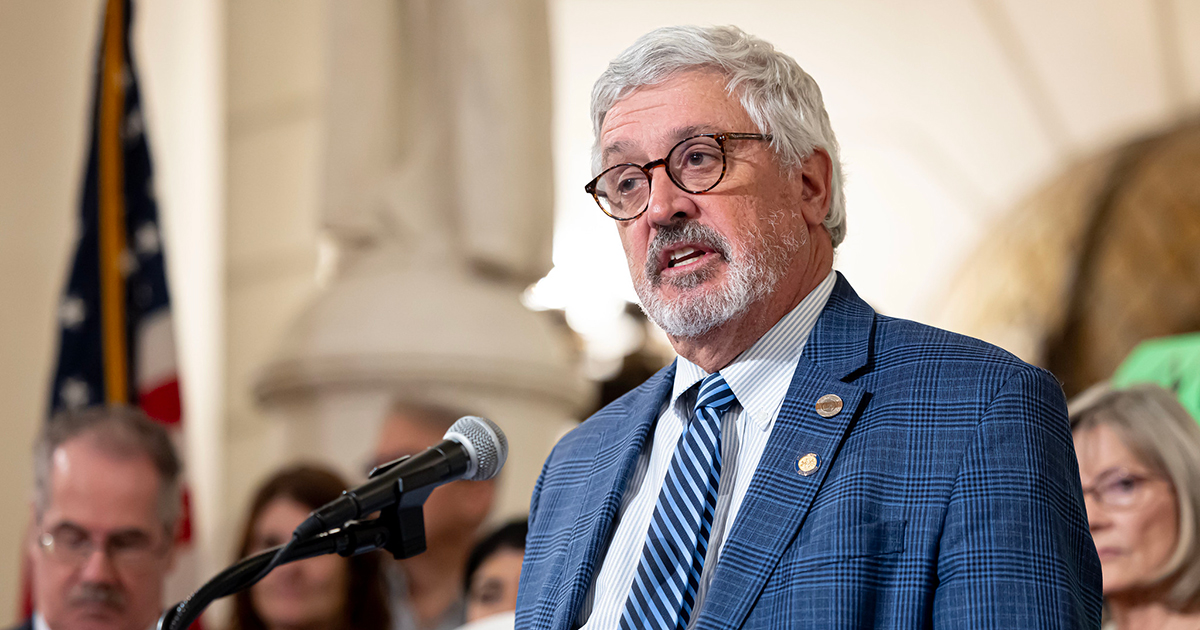
HARRISBURG, PA – October 8, 2026 – Senator Tim Kearney (D-Delaware) is introducing legislation to amend the Pennsylvania Constitution by repealing the Uniformity Clause, a provision that locks Pennsylvania into one of the nation’s most regressive tax systems and prevents lawmakers from pursuing tax policies that better support working families and small businesses.
Across Pennsylvania, families are paying more for housing, health care, groceries, and other everyday necessities while wealth continues to concentrate at the very top. The Uniformity Clause prevents Pennsylvania from pursuing reforms that could reduce the tax burden on low- and middle-income families, provide greater relief for seniors, Veterans, homeowners, and individuals with disabilities, and create tax structures that better support small businesses competing against large corporations.
“People are working hard, playing by the rules, and still finding it harder to get ahead,” Senator Kearney said. “Meanwhile, Pennsylvania remains locked into a tax system that asks too much of working people while preventing us from considering solutions that could make the system fairer. That’s not right, and it’s why this legislation is so important.”
According to the Institute on Taxation and Economic Policy’s 2024 Who Pays? report, Pennsylvania has the nation’s fourth most regressive state and local tax system. Under the Commonwealth’s strict interpretation of the Uniformity Clause, lawmakers are largely prohibited from creating graduated income taxes or pursuing many targeted tax policies available in other states.
Pennsylvania also faces a long-term structural budget deficit while demands continue to grow for investments in public education, transportation, health care, and other essential services.
The Uniformity Clause also limits Pennsylvania’s ability to create tax structures that provide greater relief to small, locally owned businesses while asking more of large corporations and the wealthiest taxpayers. Adopted in 1874, before Pennsylvania even had an income tax, the Uniformity Clause requires all taxes to be flat, regardless of a taxpayer’s ability to pay, and continues to limit Pennsylvania’s ability to respond to modern economic challenges.
“When a worker earning minimum wage pays the same income tax rate as a billionaire, something is wrong,” Kearney said. “Pennsylvanians are tired of watching costs go up while the rules stay stacked against working people and small businesses. Repealing the Uniformity Clause would allow the Commonwealth to pursue policies that reward work, help families get ahead, support local businesses, and ask those who have benefited the most from our economy to pay their fair share.”
Representative Elizabeth Fiedler (D-Philadelphia) and Representative Morgan Cephas (D-Philadelphia), sponsors of the House companion legislation, said repealing the clause would create opportunities to modernize Pennsylvania’s tax code and better support working people.
“When a working person pays the same taxes as a multibillionaire, that’s not fairness — it’s elites taking advantage of a broken system,” said Rep. Fiedler. “The Uniformity Clause has been one of the biggest roadblocks we’ve faced to get real tax reform and progressive revenue options in Pennsylvania. If we want good schools, safe roads, and efficient transit systems, we have to get serious about making sure the mega-rich pay what they owe.”
Cephas said repeal would help position the Commonwealth to address economic challenges while supporting residents and small businesses.
“Pennsylvania should have the flexibility to pursue tax policies that strengthen opportunity and respond to the realities facing families and entrepreneurs today,” Rep. Cephas said. “The Uniformity Clause limits options that could help make our tax code more equitable and support long-term economic growth across the Commonwealth.”
Because constitutional amendments require approval in two consecutive legislative sessions before being submitted to voters, the legislation represents the first step toward giving Pennsylvanians the opportunity to reconsider a constitutional provision that has shaped the Commonwealth’s tax policy for more than a century.
Representatives Elizabeth Fiedler and Morgan Cephas have introduced H.B. 2807, the Progressive Taxation for PA Bill, which would repeal the Uniformity Clause in the Pennsylvania Constitution. The legislation can be found here: www.palegis.us/legislation/bills/2025/hb2807. Senator Kearney’s sponsorship memo can be found here: www.palegis.us/senate/co-sponsorship/memo?memoID=49032.